News

A Ransomware Attack Can Halt Business Operations. Timely Protection Can Prevent It.

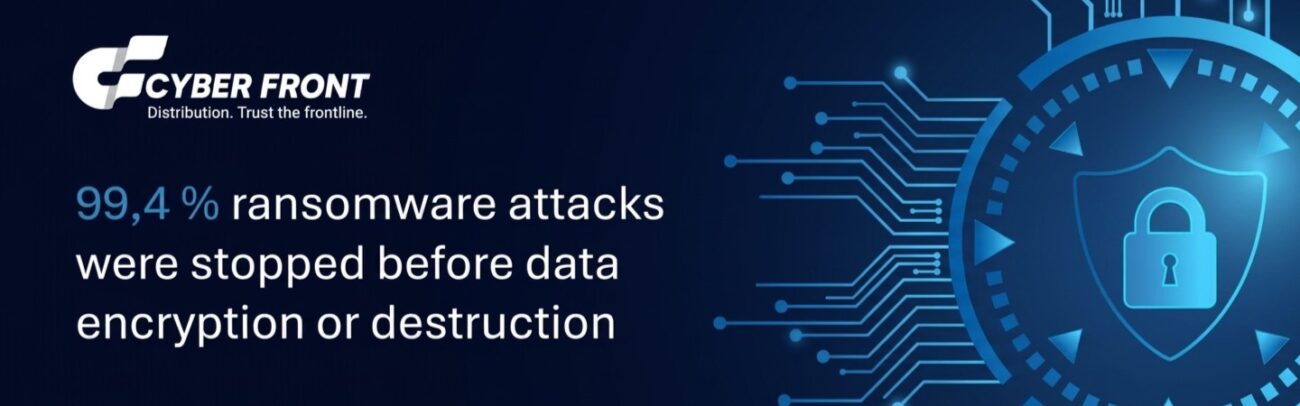
99.4% of actual ransomware attacks were stopped before data was encrypted or destroyed.

What would it mean for your business if a ransomware attack were stopped before it could cause operational disruption, data loss, and serious financial consequences?

That is exactly what the latest edition of the Halcyon Ransomware Operations Center (ROC STAR) Report for September 2026 addresses, providing an overview of current ransomware threats, attacker tactics, and attack prevention results.

Key findings from the report:

🔹 98.5% of attacks were stopped at the earliest stages, before they could progress further.

🔹 99.4% of actual ransomware attacks were stopped before data encryption or destruction.

🔹 More than $94.8 million in estimated data breach costs were potentially avoided thanks to the attacks being stopped. *

🔹 Manufacturing remained the most frequently targeted industry, with 165 reported claims, followed by Business Services, with 107 claims.

What else does the report cover?

In addition to key statistics, the report provides:

  • An analysis of how attackers bypass traditional security controls.
  • Real-world examples of attacks successfully stopped.
  • An overview of current ransomware groups and trends in their activities.
  • Identification of the industries most frequently targeted by ransomware attacks.
  • An analysis of detection gaps in existing EDR solutions and the threats they fail to detect.
  • An overview of tools increasingly abused by attackers for remote access, data exfiltration, and other malicious activities.


Prevent attacks, rather than simply dealing with their consequences.

The report’s message is clear: having a recovery plan after a ransomware attack is not enough. The goal is to stop an attack before it threatens business operations.

Halcyon is a specialized ransomware protection solution designed to detect and stop attacks at an early stage, preventing data encryption and destruction.

Halcyon solutions are available through the distribution network of Cyber Front.

Download the report and discover what the latest data reveals about ransomware threats and the opportunities for preventing them:

ROC STAR Report: September 2026

*The estimate of potentially avoided costs is based on IBM’s reported average cost of a data breach of $4.99 million.

News

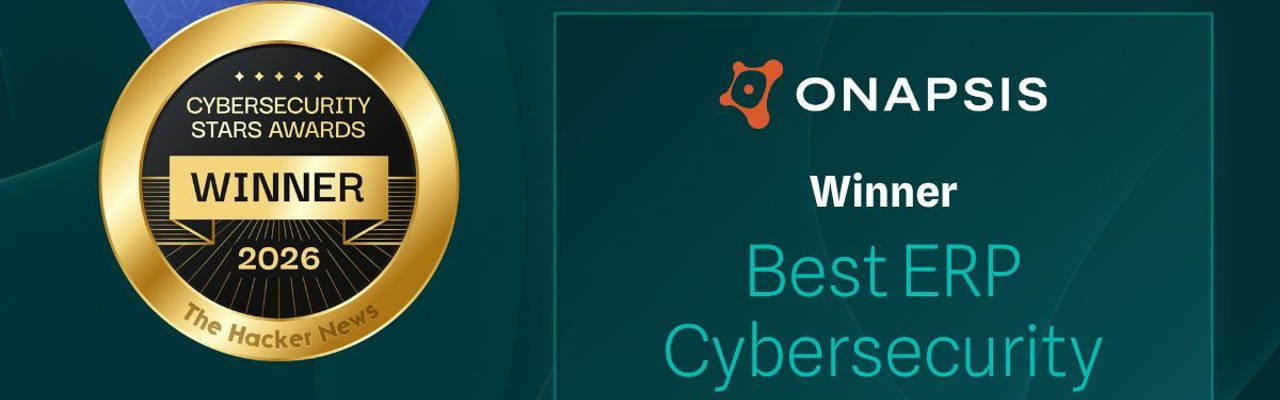
Onapsis Wins Best ERP Cybersecurity Award

Onapsis has been recognized as the winner of Best ERP Cybersecurity at The Hacker News Cybersecurity Stars Awards, further confirming its position as a leading solution for protecting business-critical ERP environments.

Traditional cybersecurity focuses heavily on protecting endpoints, networks, and cloud infrastructure. But what about the applications that actually run the business?

This is where Onapsis brings additional value. The platform is designed to help organizations identify and reduce security risks associated with complex SAP environments, which are a critical part of business operations for many organizations.

As cyberattacks targeting business-critical systems become increasingly sophisticated, organizations need specialized security solutions that enable proactive threat detection, vulnerability management, and protection of critical business processes.

As a regional distributor of advanced cybersecurity solutions, Cyber Front offers Onapsis as part of its portfolio, providing partners with access to globally recognized technology that helps protect SAP environments and strengthen the cybersecurity resilience of their customers.

The Best ERP Cybersecurity recognition is another confirmation of the importance of specialized ERP security and the need to look beyond traditional infrastructure protection — focusing also on the applications and business processes that are essential to keeping organizations running securely.

Want to learn how Onapsis can improve the security of your SAP environment or expand your cybersecurity portfolio?

📅 Schedule a meeting with our experts.
📞 +385 91 300 0360
📩 office@cyberfront.biz

News

The Frontline Teams Protecting Critical Infrastructure Deserve More Than Manual Processes

Every day, security and operations teams work behind the scenes to keep critical infrastructure running securely.

They secure hospitals filled with connected medical devices. They protect manufacturing plants, airports, logistics hubs, financial institutions, and data centers operating thousands of interconnected systems. They respond to vulnerabilities, manage operational risk, and keep essential services online while the xIoT attack surface grows larger and more complex by the day.

World Password Day is an opportunity to recognize that work.

It is also an opportunity to acknowledge a difficult truth: no human team, no matter how skilled or dedicated, can manually manage password security across today’s massive xIoT environments at scale.

And attackers know it.

The Weakest Passwords Are Still the Easiest Way In

Password security remains one of the most predictable weaknesses in cybersecurity, especially across IoT, OT, IoMT, and IIoT devices.

IP cameras. HVAC controllers. Printers. Badge readers. UPS systems. PLCs. Infusion pumps. Building automation systems.

Many of these devices still operate with:

Factory-default credentials

Weak or reused passwords

Passwords that have never been rotated

According to Phosphorus research:

More than 70% of xIoT devices still use default credentials.

Default Credentials 70%

These are not isolated edge cases. They are widespread operational realities across modern connected environments.

The issue is not negligence on the part of defenders. The issue is scale.

Security teams are managing thousands, sometimes hundreds of thousands, of devices spread across facilities, geographies, vendors, and operational teams. Many of these devices were never designed with modern credential governance in mind.

Manual password management simply cannot keep up.

Defenders Are Fighting a Different Kind of Adversary Now

The challenge is becoming even more urgent in the age of AI.

Attackers are increasingly automating credential attacks using AI-generated credential lists that combine:

Vendor-specific default passwords

Victim-specific credentials

These attacks are then operationalized through automated password spray campaigns targeting exposed xIoT devices at scale.

Adversaries no longer need to rely solely on brute force attacks or sophisticated malware. They can intelligently generate highly probable credential combinations and systematically test them across large device fleets in minutes.

For devices still operating with default or weak passwords, the barrier to compromise is dangerously low.

This is especially concerning in xIoT environments where:

Devices often lack centralized monitoring

Password rotations happen infrequently

Third-party contractors manage deployments

Legacy systems remain operational for years or decades

Traditional PAM and IAM tools cannot manage device credentials natively

The result is an expanding attack surface filled with predictable authentication weaknesses.

Attackers Target What Security Teams Cannot Easily See

One of the most common discoveries during xIoT assessments is the number of previously unknown devices quietly operating inside production networks.

Phosphorus has scanned more than 8 billion IP addresses on behalf of our customers and consistently uncovers hidden devices running:

Default passwords

Expired certificates

Vulnerable firmware

Insecure configurations

Attackers increasingly target these systems because they often provide a simpler path into a network than hardened IT infrastructure.

Ransomware operators and nation-state actors continue to pivot toward xIoT devices because too many of these devices run outdated firmware, use default passwords, or expose remote network services such as Telnet.

The Teams Protecting Critical Infrastructure Need Automation, Not More Manual Work

The professionals securing critical infrastructure are already carrying enormous operational responsibility.

They should not be forced to manage credential hygiene through spreadsheets, disconnected workflows, or manual device-by-device updates across thousands of systems.

To close these gaps, organizations must shift toward automated credential management for xIoT environments.

That means:

Identifying every connected asset

Detecting default or weak credentials automatically

Enforcing strong, unique passwords

Automating scheduled credential rotation

Monitoring continuously for credential drift and unauthorized changes

This is no longer an advanced security initiative. It is foundational cyber hygiene.

Phosphorus enables organizations to automate password management across xIoT estates safely and at scale, helping security teams eliminate one of the most persistent and exploitable weaknesses in connected environments.

Organizations can:

  • Detect and replace default credentials in minutes
  • Rotate passwords across thousands of devices automatically
  • Enforce password policies consistently across diverse device types
  • Reduce operational burden on security and infrastructure teams
  • Continuously monitor for password resets or unauthorized changes

World Password Day Is About the People Defending What Matters

 Behind every secure data center, financial services institution, hospital, manufacturing line, transportation network, and critical facility are teams working tirelessly to reduce risk and keep operations running safely.

World Password Day is a reminder that they cannot do it alone with manual processes and legacy workflows built for a different era.

As the number of connected devices continues to explode, securing xIoT credentials must become automated, continuous, and scalable.

Because the defenders protecting critical infrastructure deserve tools that operate at machine speed against attackers already doing the same.

News

Geopolitics, AI, and Cyber Resilience: Presidential Forum at RSA Conference 2026!

From March 23 to 26, the cybersecurity world will once again gather in San Francisco for one of the most significant and influential global events in the industry – RSA Conference 2026. With a tradition spanning over three decades, this conference has year after year confirmed its position as a central meeting place for leaders in technology, security, business, and the public sector.

Key topics shaping cybersecurity in 2026 include cyber resilience amid geopolitical upheavals, protection of critical infrastructure and data, risk management amid accelerated digital transformation, the application of artificial intelligence (AI) in cybersecurity operations, and strengthening public-private partnerships as a cornerstone of global stability.

While the main themes are explored in open panels and presentations, one of the most exclusive discussions will take place behind closed doors.

During RSA week, the investment fund Evolution Equity Partners traditionally organizes the Presidential Forum – a unique gathering of world leaders, investors, and top experts from the global cybersecurity industry. Through strategic discussions and working sessions, participants jointly define key directions for cybersecurity development, enhance the protection of critical infrastructure, and shape a vision for a safer digital future for companies, individuals, and nations amid rapid change.

Past speakers have included George W. Bush (2023), Bill Clinton (2024), and Boris Johnson (2025).
This year, the special guest and keynote speaker will be Arnold Schwarzenegger, former Governor of California, actor, and entrepreneur, whose experience bridges politics, business, and global leadership.

The event is structured in two segments:

  1. Panel discussions dedicated to global and regional security challenges
  2. An exclusive “invite-only” gala dinner for more than 200 CEOs, CFOs, and CISOs from leading global Fortune 500 companies

The following day, Arnold Schwarzenegger will hold additional closed-door discussions with representatives of Evolution Equity Partners, focusing on strategic initiatives and long-term direction for the cybersecurity market.

Cyber Front will participate this year, through its representatives, as a partner and regional advisor to Evolution Equity Partners, acting as promoter and coordinator of the Presidential Forum and RSA week. In collaboration with leading CEOs, CFOs, and CISOs from the world’s largest companies, including Fortune 500 firms, Cyber Front continues to build bridges between the regional and global cybersecurity ecosystems.

The Presidential Forum at RSAC 2026 once again confirms that the future of cybersecurity is shaped at the intersection of geopolitics, capital, and technology – where decisions are made that define global resilience in the digital era.